Best life Tips and References website . Search anything about life Ideas in this website.
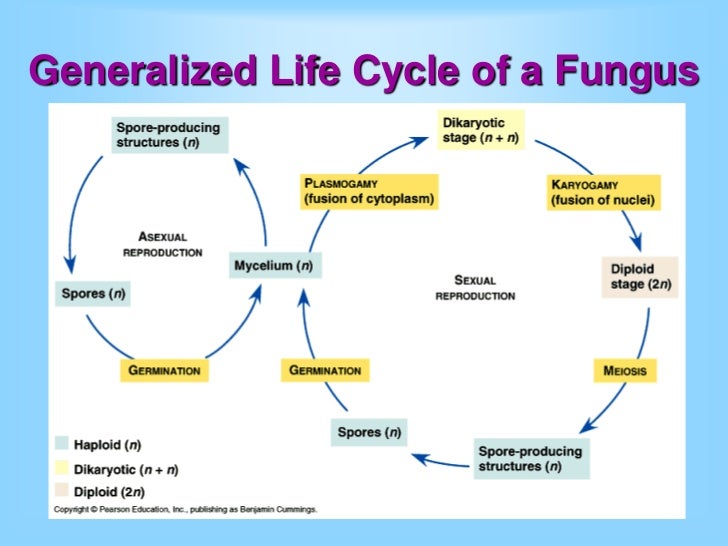
Dikaryotic Fungal Life Cycle. In these fungi, plasmogamy (fusion of the cellular contents of two hyphae but not of the two haploid nuclei) results in dikaryotic hyphae in which each cell contains two haploid nuclei, one from each parent. Meiosis then produces either four haploid nuclei or four haploid cells.
PPT Division PowerPoint Presentation, free from www.slideserve.com
The dikaryophase in the life cycle is initiated by the germination of aecidiospores (aeciospores) on wheat and multiplied during the growing season of wheat by the formation of uredospores. The process in the life cycle of a fungus that gives rise to the dikaryotic phase is plasmogamy, which is defined as the fusion of cytoplasm without the fusion of nuclei. Draw a generalized fungal life cycle, labeling asexual and sexual reproduction, meiosis, plasmogamy, karyogamy, and the points in the cycle when spores and the zygote are produced.
PPT Division PowerPoint Presentation, free
This grows for a short period of time until it meets a haploid mycelium of an opposite mating type. The fungal life cycle begins when two haploid hyphae of appropriate mating types (often depicted as and come into contact with each other. The process in the life cycle of a fungus that gives rise to the dikaryotic phase is plasmogamy, which is defined as the fusion of cytoplasm without the fusion of nuclei. The life cycle begins when a haploid spore germinates, dividing mitotically to form a ‘multicellular’ haploid organism (hypha).